Newsletter Subscribe
Enter your email address below and subscribe to our newsletter
Enter your email address below and subscribe to our newsletter

 BySonu
The 16811 Router Login and Configuration Guide presents a methodical approach to secure administration and repeatable setup. It outlines steps to access the admin panel, define WAN/LAN, and establish core routing with reliable DHCP. It then covers wireless security, access controls, and firewall rules to enforce segmentation. The guide emphasizes policy alignment and verifiable deployments across interfaces, with troubleshooting paths that lead to reproducible resolutions. The next details hold practical implications for consistent configuration outcomes.
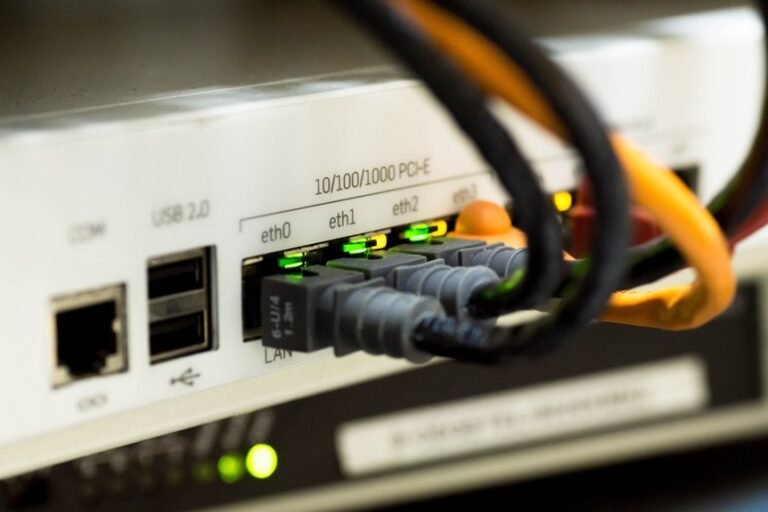
To access the 16811 router’s admin panel, a user should connect a computer to the router via Ethernet or ensure a stable Wi‑Fi connection to the device’s default network.
The login interface presents authenticated access options; credentials and session management are documented for secure use.
Firmware updates are considered separate maintenance tasks outside initial access, ensuring ongoing reliability and performance.
With the initial access established, the user proceeds to configure the 16811 router through a concise sequence of steps.
Systematic login verification precedes WAN and LAN field definitions, followed by DHCP, IP addressing, and basic routing settings.
Documentation notes unrelated topic and random chatter as placeholders for testing, ensuring configuration remains uncluttered, reproducible, and free of unnecessary parameters.
Securing the wireless environment begins with properly configuring encryption, access controls, and network segmentation to prevent unauthorized access. The protocol emphasizes Secure Wireless configurations, robust Guest Access policies, and explicit Firewall Rules to restrict inbound traffic.
Network Segmentation is implemented to confine devices and services, reducing risk. Documentation aligns with policy, auditing, and repeatable, secure deployment across all 16811 router interfaces.
Fine-Tuning and Troubleshooting Common 16811 Issues examines systematic approaches to identify, isolate, and resolve performance and connectivity problems across 16811 router deployments.
The methodical process enumerates diagnostic steps, logs, and test sequences, discarding irrelevant signals. It treats unrelated topic, off topic unconnected issue, unrelated problem signals as noise, guiding technicians toward reproducible, verifiable resolutions while preserving user autonomy and network integrity.
The device undergoes a factory reset by holding the reset button for ten seconds, then releases. After reboot, perform a firmware update to ensure security and stability, following on-screen prompts and official release notes for configuration recovery and protection.
Yes, firmware updates can be performed manually via USB or SD card on this device. The process requires obtaining the correct image, placing it on the media, entering recovery mode, and applying firmware updates and security patches methodically.
Backup strategies include exporting configuration via admin interface, then storing off-device; restore options involve importing settings from a file, while verifying firmware management, parental controls, and DNS defaults align post-restore for uninterrupted freedom.
The default DNS server is not specified; the device relies on the configured DHCP/ISP values. In practice, the default gateway and signal strength metrics inform network behavior, guiding troubleshooting while ensuring stable performance within a freedom-seeking, technical framework.
Parental overview is achieved by enabling Device restrictions via the router’s admin interface, applying a single policy to all connected devices. The method is precise and scalable, offering controlled access while preserving user autonomy and network performance.
The guide presents a precise, methodical sequence for accessing, configuring, and securing the 16811 router. By establishing authenticated admin access, defining WAN/LAN, and enabling DHCP, the foundation is solid. Wireless security, guest policies, and explicit firewall rules reinforce segmentation and policy alignment, while repeatable deployment ensures consistency across interfaces. Troubleshooting steps verify reproducible resolutions. Are users prepared to iterate configurations to maintain a resilient, auditable network? The answer lies in disciplined, documented practice.