Newsletter Subscribe
Enter your email address below and subscribe to our newsletter
Enter your email address below and subscribe to our newsletter

 BySonu
Accessing the 168,100,1 admin panel requires verifying default gateway IPs such as http://192.168.1.1 or http://192.168.0.1, with careful attention to device compatibility and firmware state. The guide proceeds through WAN, Wi‑Fi, and LAN configurations to establish external connectivity and internal segmentation. Security is prioritized via long-lived credentials, rotation, and least privilege, coupled with centralized controls and audit capabilities. A practical, stepwise approach raises questions that compel further examination before proceeding to troubleshooting and validation.
To access the 168,100,1 admin panel, the user directs a web browser to the device’s default IP address, commonly http://192.168.1.1 or http://192.168.0.1, depending on the configuration. The interface presents standard login prompts, enabling configuration reviews. The process emphasizes network topology insights and device compatibility checks, ensuring secure access and consistent management across future deployments.
Configuring WAN, Wi-Fi, and LAN involves establishing the router’s external connection, wireless broadcasting, and wired networking domains in a cohesive, standardized manner.
The Core Network Setup defines WAN parameters, radio/SSID behavior, and LAN segmentation, enabling reliable data flow.
Practitioners should consider disabling remote access, monitor DNS leakage, and implement stable DNS settings for predictable, private connectivity without unnecessary exposure.
Securing the 168,100,1 requires a disciplined approach to passwords, encryption, and access controls. Authorized users adopt unique, long-lived credentials, rotate periodically, and enforce least privilege. Encrypted backups protect data integrity during incidents; firmware monitoring detects unauthorized changes. Access controls center on centralized policy enforcement, role-based permissions, and audit trails. Documentation, regular reviews, and automated alerts sustain robust security posture.
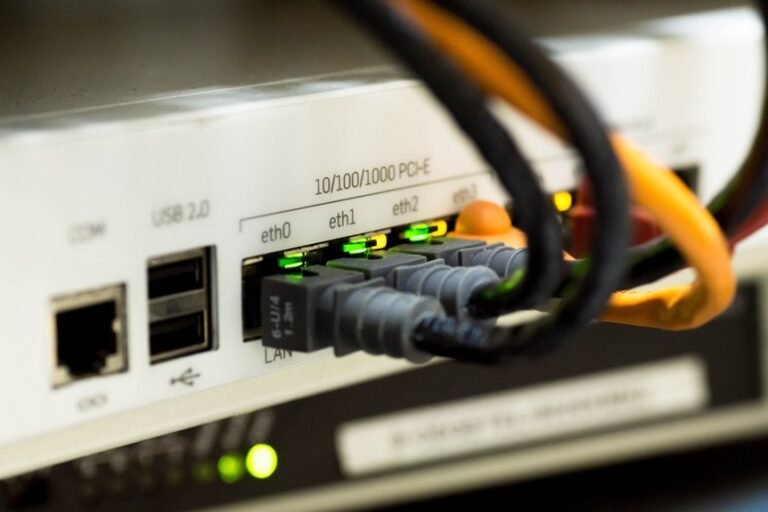
Common login and connection issues with the 168,100,1 are typically rooted in authentication, network configuration, or device compatibility. The analysis follows a methodical sequence: verify credentials, confirm firmware alignment, inspect LAN/WAN metrics, and test cable and port integrity. If problems persist, assess unrelated topic signals and random ideas for potential misinterpretations impacting user experience and configuration interoperability.
Yes, one can change the router’s default DNS; the procedure involves accessing the admin panel, selecting DNS settings, and substituting preferred servers. This enables update DNS security and supports a more freedom-oriented, configurable network environment.
A locked garden gate opens: Enable guest isolation. To enable: access admin, navigate Guest Network, toggle Enable guest isolation. Consider Enable guest network isolation, Change DNS settings, VPN passthrough, Parental controls, Firmware updates scheduling, then save.
The device supports vpn passthrough; enable via Security or WAN settings, toggle VPN Passthrough to On. For policy-aware use, enable parental control features alongside to manage traffic and preserve user autonomy and privacy.
A case study shows parental controls cover site filtering, time schedules, and device limits. Parental controls are configurable via the admin interface; firmware updates should be installed to ensure feature freshness and security.
Firmware autonomy for 168,100,1 can be scheduled by enabling automatic patching with a defined cadence; the system autonomously checks, downloads, and installs updates, preserving uptime while ensuring security and freedom through consistent, disciplined maintenance practices.
In carefully parsed bytes and sanitized waves, the 168,100,1 guide concludes with immaculate restraint: a triumph of policy over empathy. The admin panel, once a tantalizing mystery, now greets with predictable prompts and robust, if slightly bland, security rituals. Satire aside, the network’s spine—WAN, WLAN, LAN—stands reinforced by credentials rotated, audits routine, and backups encrypted. If misconfigurations lurk, they are politely exiled to logs, where relentless precision mocks chaos and invites orderly reboot.