Newsletter Subscribe
Enter your email address below and subscribe to our newsletter
Enter your email address below and subscribe to our newsletter

 BySonu
Access to the 168.1.129 router login page is typically via http://168.1.129 or http://192.168.1.129. The guide outlines default credentials that must be updated immediately, with a focus on policy-compliant, unique password standards. It then details concise security and performance adjustments, including firmware integrity checks and anomaly alerts. The section on essential settings covers Wi‑Fi hardening, precise port forwarding, and firmware updates. The discussion will consider how these elements integrate before proposing concrete configuration steps.
To access the 168.1.129 router login page, users should open a web browser and navigate to http://168.1.129 or http://192.168.1.129, depending on the network configuration.
The procedure documents how to access the login page, detailing initial access steps, browser compatibility, and secure session initiation.
Emphasis remains on practical access, avoiding unnecessary details about default credentials or changes beyond initial login.
Default credentials are the primary access control mechanism for the 168.1.129 router and must be replaced at first logon. The guidance emphasizes immediate removal of factory terms and standardizes a new, unique credential set.
For security, document the chosen default credentials policy, enforce change first, and apply strong authentication practices to prevent unauthorized access and preserve network integrity.
Quick Security and Performance Tweaks for 168.1.129 involves concise, methodical adjustments that optimize network protection without compromising throughput.
The guidance highlights targeted mitigations for security issues, emphasizing firmware integrity checks, regular patching schedules, and anomaly alerts.
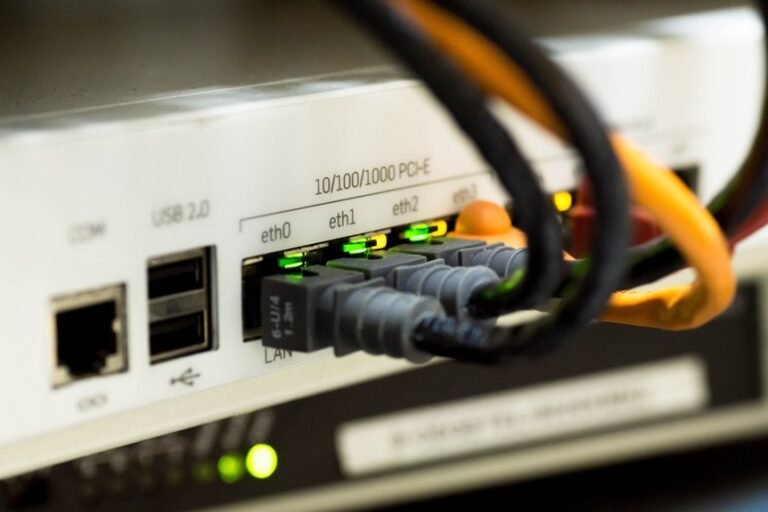
Hardware considerations include reliable power, heat management, and robust network interfaces to sustain stable throughput while reducing exposure and unauthorized access risks.
Essential Settings: Wi-Fi, Port Forwarding, and Firmware Updates delineates the core configuration tasks that directly impact connectivity, accessibility, and security on the 168.1.129 router. This section analyzes secure wireless setup, precise port mapping, and timely firmware updates, emphasizing minimal exposure to security vulnerabilities and ensuring hardware compatibility across devices, kernels, and firmware revisions while maintaining user autonomy and network performance.
The forgotten password is recoverable by performing the router’s reset procedure, which restores defaults and requires reconfiguration. A reset clears custom credentials; after reboot, use default login, then set a new password following on-screen or manual instructions.
“Yes, some models allow resetting without losing configurations.” A clockwork-century analogy is used to illustrate: restoring factory settings is avoided if options exist to save configurations; however, restore potential compromises, demanding careful saving configurations before hard resets.
A guest network should be created with strong authentication and a separate SSID. Implement guest network security via WPA3 or WPA2-Enterprise, disable admin access from guest VLAN, and enforce guest access isolation to prevent access to LAN resources.
Parallelism guides the choice of DNS settings for gaming latency, DNS optimization, and network routing. It states: prioritize low-latency resolvers, enable UDP, use regional servers, keep TTL short, and test paths to optimize gaming latency for consistent performance.
Parental controls overview: enable across devices by configuring a centralized account or router-based profiles, then apply device wide restrictions, time limits, and content filters consistently. The approach preserves user autonomy while enforcing family-safe browsing and app usage.
In conclusion, the 168.1.129 guide leaves nothing to chance—except, ironically, the user’s memory. The login page is simple enough to locate, yet perilously easy to ignore once the compliance checklist glitters. Default credentials must be replaced, yet the real vulnerability lies in forgetting to monitor firmware. Security and performance tweaks are straightforward—until they aren’t, requiring constant vigilance. In short: be meticulous, or enjoy the unpredictable thrill of network exposure and patching urgency.